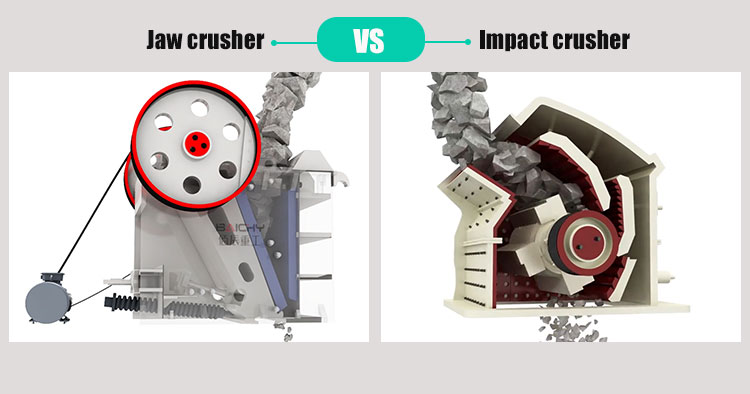
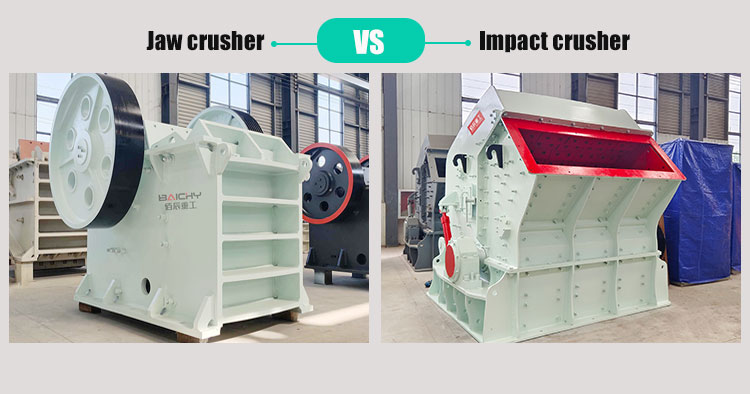
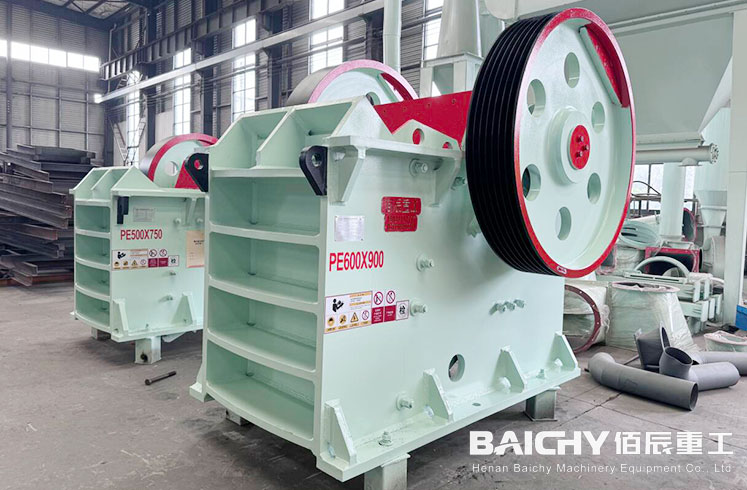
Jaw crusher and impact crusher are two very important rock crushing equipment in the stone crushing plant. The obvious difference between jaw crusher and impact crusher is structure and working principle. Jaw crusher uses compressive force to break hard stone. The material is squeezed and crushed in the crushing chamber composed of movable jaw and fixed jaw. Impact crusher adopts the principle of impact crushing, the material is repeatedly impacted and crushed between the rotor (blow bar) and the impact plate.
So, how do you choose? Let’s break down the ultimate battle of Jaw Crusher Vs Impact Crusher across five critical factors: application scope, material feed size, capacity, output shape, and price.
1. The scope of application is different
The biggest deciding factor between these two crushing machines is the hardness and abrasiveness of your raw material.
● The Jaw Crusher (For Hard & Abrasive Rocks):
Thejaw crusher can crush all kinds of soft and hard materials, and the compressive strength is between 300-350Mpa. They work by using brute compressive force—literally squeezing the rock between two heavy steel plates until it shatters. Because the crushing action is a slow squeeze rather than a high-speed strike, it experiences very little wear and tear. This makes the jaw crusher perfect for highly abrasive, extremely hard rocks like granite, basalt, quartzite, and tough metallic ores.
● The Impact Crusher (For Soft & Medium-Hard Rocks):
An impact crusher works completely differently. It uses a high-speed spinning rotor equipped with heavy blow bars to violently smash the rock in mid-air, throwing it against steel breaker plates. While this is incredibly effective, striking abrasive rocks at high speeds will destroy your blow bars in a matter of days. Therefore, impact crushers are best used for soft to medium-hard, low-abrasion materials like limestone, gypsum, coal, and recycled concrete. Impact crusher is suitable for crushing materials with low toughness and brittle materials with medium hardness and below, such as limestone, clay, calcium carbonate, gypsum etc. If it is hard, it will cause great damage to the wearing parts and shorten the service life.
2. Material particle size
● Jaw Crusher (Massive Feed Sizes):
Jaw crushers are designed to be the very first machine in your production line (the primary crusher). They feature a deep, wide, V-shaped crushing cavity. This massive opening allows them to easily swallow oversized boulders that are as large as a tractor tire.
● Impact Crusher (Medium to Small Feed Sizes):
While there are some large primary impact crushers designed for soft limestone, most impact crushers are used as secondary crushers. They generally have a smaller feed opening. If you try to feed a massive, oversized boulder into a standard impact crusher, it will likely bridge over the rotor or jam the machine completely. They prefer pre-crushed rocks that are already manageable in size.
3. Different production capacity
How much material can you process, and how small does it get in a single pass?
● Jaw Crusher Capacity:
Jaw crushers offer incredibly high throughput for bulky materials. They are workhorses built to steadily chew through mountains of rock hour after hour. However, their reduction ratio is relatively low (usually around 3:1 to 5:1). This means if you put a 30-inch rock in, you might get a 6-inch rock out. It reduces the size, but you still need another machine to finish the job.
● Impact Crusher Capacity:
Impact crushers are famous for their massive reduction ratio (often reaching 10:1 or even 15:1). Because the rocks are smashed multiple times inside the chamber, an impact crusher can take a medium-sized rock and turn it directly into fine gravel in just one single pass. This high efficiency can sometimes eliminate the need for a third crushing stage entirely.
4.Different output particle type
If you are selling aggregate to construction companies for asphalt or concrete, the shape of the finished stone is arguably the most important factor. As a coarse crusher, the jaw crusher has a relatively large discharge fineness, generally below 300-350mm (depending on the manufacturer and product model), and the impact crusher is a medium or fine crusher, and its discharge fineness is of course smaller.
● Jaw Crusher Output (Rough and Jagged):
Because a jaw crusher splits rocks along their natural fault lines, the output is not very pretty. The crushed stones are often coarse, jagged, and heavily flat or elongated. This output is perfectly fine for raw bulk fill, but it will fail strict construction standards.
● Impact Crusher Output (Perfectly Cubical):
This is where the impact crusher dominates. The high-speed shattering effect breaks the rock uniformly from all angles. The result is a beautifully shaped, perfectly cubical aggregate with almost zero flat or flaky particles. This is exactly the premium product that highway contractors and concrete mixing plants demand.
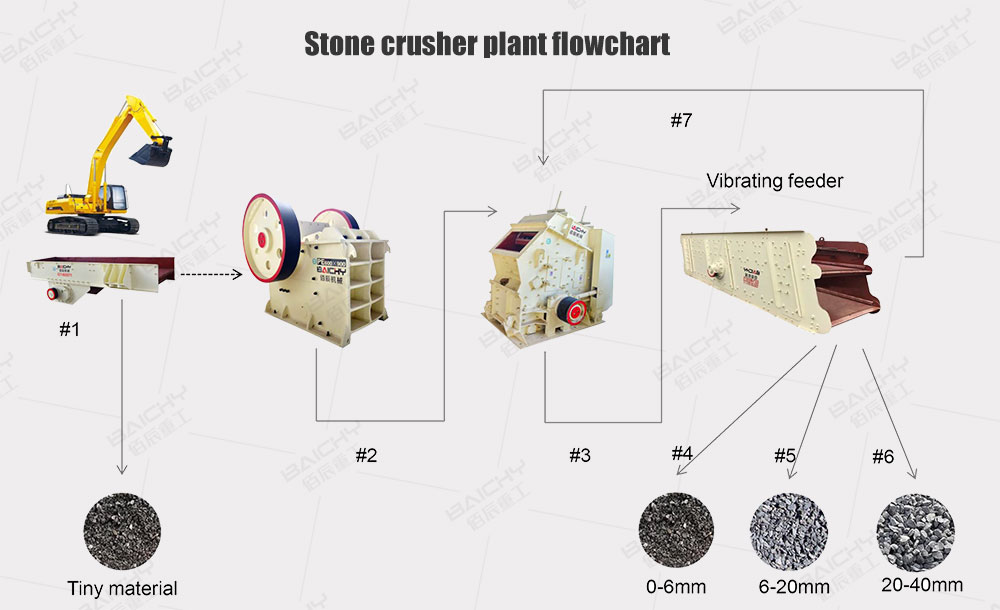
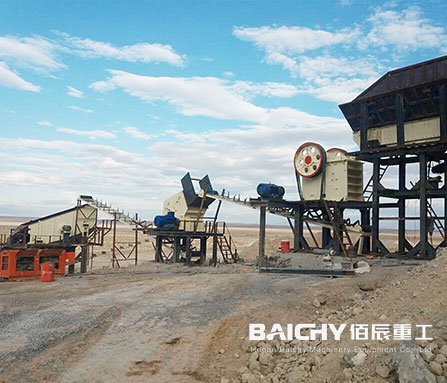
Therefore, in actual production, the jaw crusher is usually equipped with an impact crusher for further shaping, and the two are also a common combination in the crushing production line.
5. Different prices
Which is better, jaw crusher or impact crusher? According to the market sales situation, the overall sales of jaw crushers are more than impact crusher, mainly due to its versatility and flexibility. It can not only be used as a crushing equipment alone, but also can combine with other machines in various production lines. It is a cost-effective one among all crushing equipment.
● Jaw Crusher Price:
A jaw crusher is generally more affordable to buy and much cheaper to run. Because the machine moves slowly and simply squeezes the rock, the wear parts (the jaw plates) last a very long time—even when crushing hard granite. Your daily maintenance costs and downtime will be incredibly low.
● Impact Crusher Price:
The initial purchase price of an impact crusher might be similar or slightly higher, but the operating costs are significantly higher. High-speed impact creates massive friction. If you put abrasive rocks into this machine, you will find yourself replacing the heavy steel blow bars frequently. However, if you are crushing soft limestone and selling the premium cubical aggregate at a higher market price, the machine will easily pay for itself.
People Frequently Asked Questions-FAQ:
1.What are the disadvantages of impact crushers?
Impact crushers typically require more maintenance than compression style crushers – especially if crushing hard and abrasive materials. This is because the material in an impact crusher is constantly colliding within the crusher at high velocities to break the rock apart.
2.What crusher is best for concrete?
In our professional opinion, an impact crusher is the best choice for most concrete, or asphalt recycling applications. It mainly uses impact force to break stone into smaller size. Although jaw crushers do a dependable job. Jaw crusher capacities vary depending on the make and the model being used. Another disadvantage of jaw crushers is that the resulting particle sizes can sometimes be a little uneven.
3.What is a impact crusher used for?
The impact crusher is commonly used for the crushing of limestone, coal, calcium carbide, quartz, dolomite, iron pyrites, gypsum, and chemical raw materials of medium hardness.






 2026-09-28







 86-15093113821
 86-15093113821