Two machines that often come up in crushing circuits especially in coal crushing plant are the Jaw Crusher and the Roller Crusher (also known as a roll crusher). They might seem like they do the same job. However, in reality, they are complete opposites. One is a heavy-duty beast designed for massive boulders, while the other is a precision tool built for fine grinding and minimizing waste. So how to choose the right one? Let’s break down the ultimate battle of Jaw Crusher vs Roller Crusher across five key areas: working principle, material type, feed size, output quality, and maintenance.
What is a Jaw Crusher?
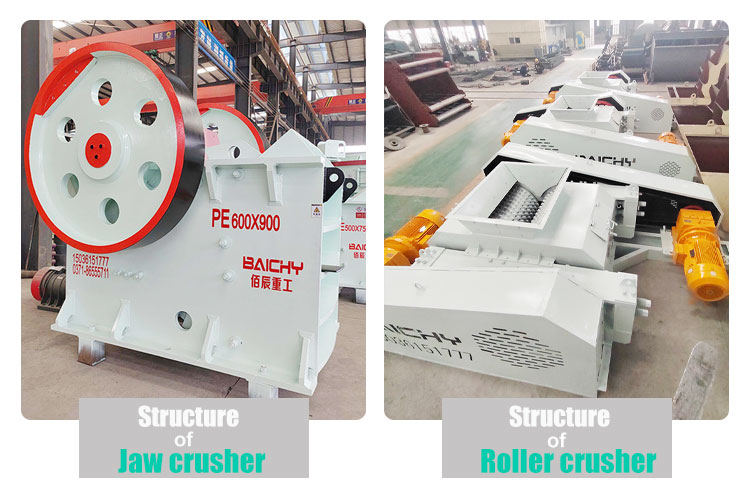
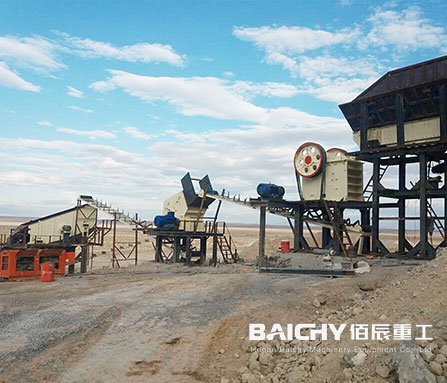
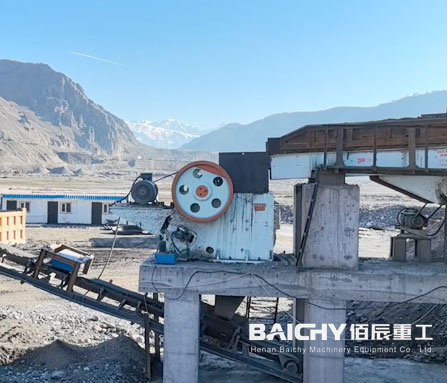
A jaw crusher uses a fixed “jaw” plate and a moving jaw plate to crush material through compressive force. The moving jaw swings back and forth, squeezing rocks between the plates until they break into smaller pieces. It’s designed for primary crushing—reducing large, hard materials (up to 1.5 meters) into medium-sized fragments (50–200mm).
● Commonly used for:
● Hard rocks like granite, basalt, and ore
● Construction debris (concrete, asphalt)
● Quarrying and mining operations
What is a Roller Crusher?
A roller crusher features two rotating cylinders (rollers) that crush material by squeezing it between them. The rollers can be smooth or toothed, depending on the material. It’s ideal for secondary or fine crushing, producing uniform particles (often 1–50mm) with minimal dust.
Commonly used for:
● Soft to medium-hard materials (limestone, coal, clay)
● Minerals (gypsum, salt)
● Recycling brittle materials (glass, bricks)
Key Differences: Jaw Crusher vs Roller Crusher
1. Crushing Mechanism
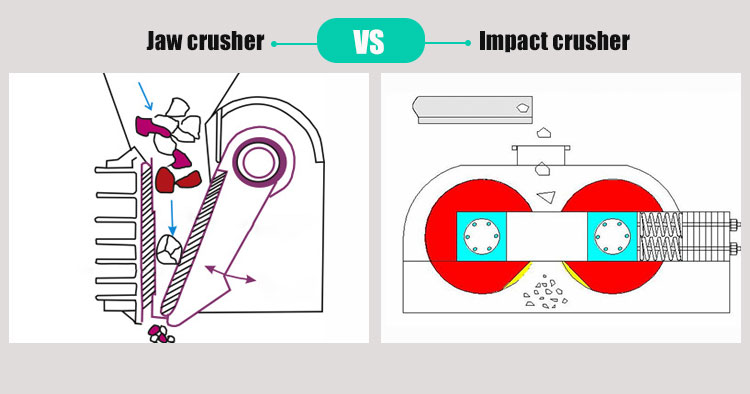
● Jaw Crusher: A jaw crusher operates using pure, brutal compression. It features a V-shaped crushing chamber with two massive steel plates. One plate is fixed, and the other constantly swings back and forth. As a rock drops into the chamber, the swinging jaw repeatedly squeezes it against the fixed jaw until the rock shatters and falls through the bottom.
● Roller Crusher: A roller crusher works much like a giant rolling pin squeezing dough. It features two heavy metal cylinders (rollers) rotating in opposite directions toward each other. When material is dropped between them, it gets pulled in, squeezed, and crushed by the massive pressure of the twin rollers. It uses a combination of compression and shear force to gently but firmly snap the rocks apart.
2. Material Suitability
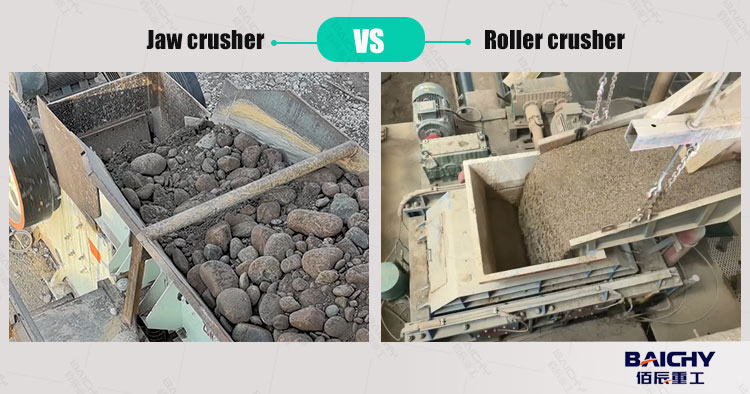
● Jaw Crusher: If you are dealing with extremely hard and abrasive materials, the jaw crusher is your best friend. It easily chews through granite, basalt, quartzite, and tough metallic ores without wearing down quickly..
● Roller Crusher: Roller crushers are incredibly unique. They are perfect for medium-hard or brittle materials like coal, limestone, and slag. But their true superpower? Handling sticky or wet materials. Because the rollers are constantly spinning and scraping against the material, a roller crusher will rarely clog when processing damp clay or wet coal—a situation that would instantly jam a jaw crusher.
3. Output Size
● Jaw Crusher: A jaw crusher is all about raw size reduction. The final product is usually coarse, jagged, and heavily varied in size. It is perfect for preparing rocks for the next stage of crushing, but it is not a finished product you can sell to a concrete plant.
● Roller Crusher: This is where the roller crusher steals the show. It is famous for producing perfectly uniform, fine materials (like premium concrete sand). Even better, its gentle squeezing action produces almost no useless stone dust. While impact crushers violently smash rocks and create clouds of wasted powder, a roller crusher strictly controls the size, keeping all your valuable material intact.
4. Efficiency & Maintenance
● Jaw Crusher: Higher throughput (10–1000 TPH) but consumes more energy. Jaw crushers are structurally simple. They have very few moving parts. Maintenance usually just involves greasing the bearings and occasionally replacing the heavy steel jaw plates when they wear down. Operating costs are generally very low.
● Roller Crusher: Roller crushers are also relatively affordable to buy, but their maintenance requires a bit more attention. Over time, the smooth or toothed surfaces of the rollers will wear down and need to be resurfaced or replaced to keep the output size accurate. However, they are equipped with a brilliant spring-loaded safety system. If an uncrushable piece of metal falls inside, the rollers will safely spread apart, let the metal pass, and instantly snap back into place without breaking the machine.
5. Cost
● Jaw Crusher: Higher initial cost but lower long-term maintenance for hard materials.
● Roller Crusher: Lower initial cost but higher maintenance costs if processing abrasive materials.
Which One Should You Choose?
Choosing between a Jaw Crusher and a Roller Crusher is simple when you look at your goals:
● Choose a Jaw Crusher if: if you need a rugged, heavy-duty machine to take massive boulders and perform the first stage of rough crushing.
● Choose a Roller Crusher if: if your rocks are already small, and you want to turn them into high-quality, uniform sand or fine gravel with absolute minimal dust waste.
Final Thoughts
Jaw crushers and roller crushers serve distinct roles in material processing. Jaw crushers are workhorses for tough, large-scale primary crushing, while roller crushers shine with softer materials requiring precise, fine output. Assess your material type, desired output size, and budget to pick the right tool for the job. Henan Baichy Machinery Equipment Co., Ltd. is a mining machinery manufacturer integrating R&D, production and sales. Stone crusher is one of its core production equipment. It has mature technology and processes, complete models and configurations, and technical engineers can tailor production line configuration plans for you. If you are interested in the stone crusher, please click on the online consultation to get solution and price now. Baichy Machinery is dedicated to serving you 24 hours a day!
People Also Frequently Asked - FAQ:
1.What are the disadvantages of roll crushers?
The disadvantage of roll crushers is that, in order for reasonable reduction ratios to be achieved, very large rolls are required in relation to the size of the feed particles. They therefore have the highest capital cost of all crushers for a given throughput and reduction ratio.
2.What is a roll crusher used for?
Roll Crushers are designed to handle the primary, secondary and tertiary stage crushing of friable materials such as coal, salt, clay, bauxite, limestone and other minerals of similar characteristics in the mining, power generation and numerous other industries.
3.Which type of crusher is best?
Different types of crushers are optimal for distinct crushing needs. Subjected to type and hardness of materials, capacity, feeding size, finished granular size, construction site, the chosen crusher could be jaw crusher, impact crusher, cone crusher, roller crusher, hammer crusher, vsi sand crusher etc.
4.What is the efficiency of roll crusher?
The theoretical efficiency of the double roll crusher when crushing limestone was 60% while that of kaolin was 80%. Abstracted from this article: http://www.ijettjournal.org/




 2026-09-28








 86-15093113821
 86-15093113821